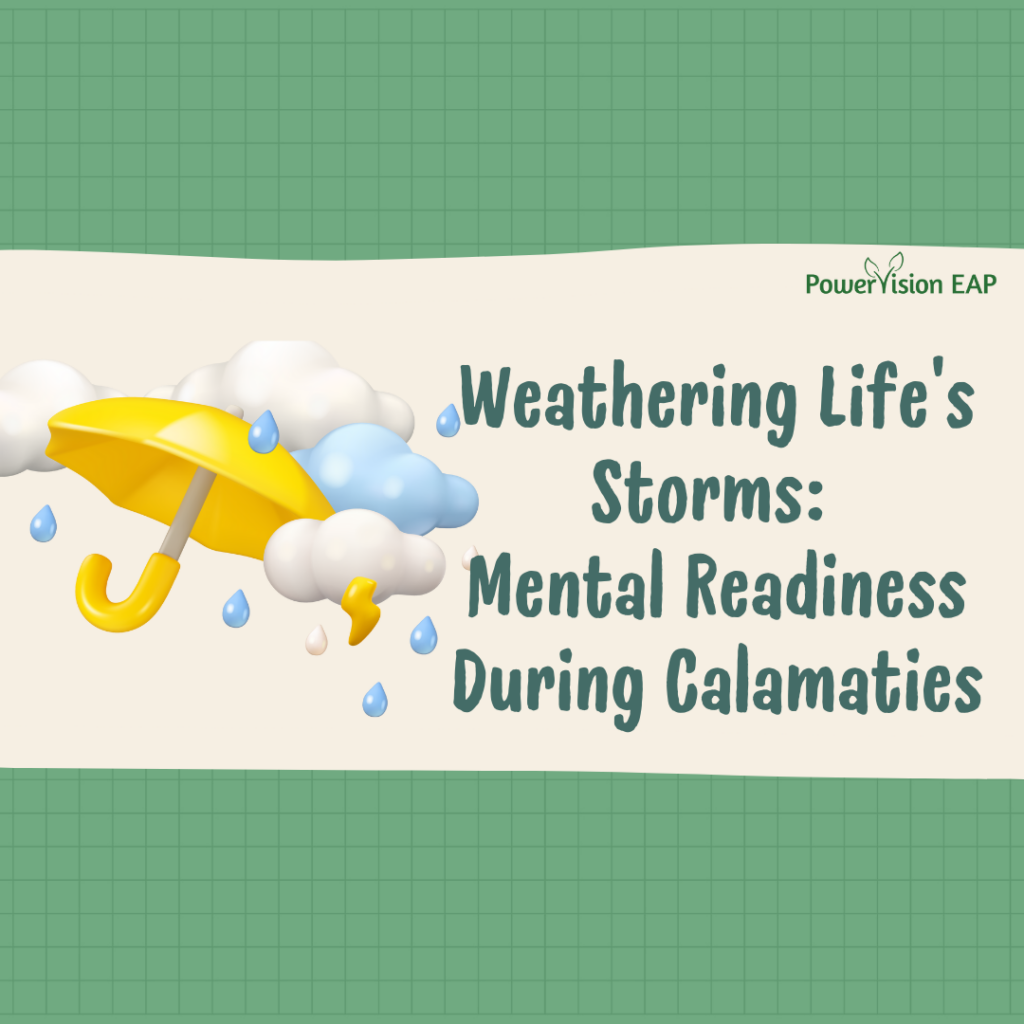
Natural disasters such as typhoons, earthquakes, and tsunamis can shake more than the physical environment. They also disrupt mental well-being, emotional stability, and our sense of safety. In the Philippines, where such events are not uncommon, cultivating resilience and mindfulness is essential to both survive and recover with strength and clarity.
These are practical steps to remain grounded and emotionally equipped during times of adversity:
- Practice Mindfulness to Stay Grounded
Mindfulness is the practice of being fully present — noticing your thoughts, feelings, and surroundings without judgment. In times of chaos, mindfulness can help reduce anxiety, improve decision-making, and anchor you in the “now.” You can try the 5-4-3-2-1 Technique: Name five things you can see, four you can touch, three you can hear, two you can smell, and one you can taste.
- Prepare Ahead with Mental and Practical Readiness
Being prepared physically also protects your mental health. Having a disaster kit and emergency plan can significantly reduce fear and uncertainty. Regularly rehearse emergency drills and visualize yourself responding calmly. This strengthens psychological preparedness.
- Lean on Community and Social Connection
Isolation during or after a calamity can heighten trauma. Reach out to others — whether through family, community groups, or online platforms — for emotional support and practical help.
- Allow Space for Emotions
It’s okay to feel overwhelmed. Denying emotions often prolongs distress. Allow yourself to feel fear, grief, or anger, but don’t stay stuck in them. Journaling, talking to a trusted person, or expressing emotions through art or prayer can be therapeutic.
- Know When to Seek Help
It’s courageous — not weak — to ask for help when you’re struggling. Reach out to mental health professionals, crisis lines, or EAP counselors who are trained in trauma and disaster response.
References
American Psychological Association. (2020). Building your resilience. https://www.apa.org/topics/resilience
Garland, E. L., Geschwind, N., Peeters, F., & Wichers, M. (2015). Mindfulness training promotes upward spirals of positive affect and cognition: Multilevel and autoregressive latent trajectory modeling analyses. Frontiers in Psychology, 6, 15. https://doi.org/10.3389/fpsyg.2015.00015
Hobfoll, S. E., Watson, P., Bell, C. C., et al. (2007). Five essential elements of immediate and mid–term mass trauma intervention: Empirical evidence. Psychiatry: Interpersonal and Biological Processes, 70(4), 283–315. https://doi.org/10.1521/psyc.2007.70.4.283
Frankl, V. E. (2006). Man’s Search for Meaning. Beacon Press.
World Health Organization. (2013). Building back better: Sustainable mental health care after emergencies. https://www.who.int/publications/i/item/9789241564571