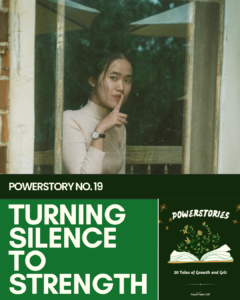
Chapter 1: Too Tired to Keep Pretending
Most mornings, Cornelia woke up already tired. Her body felt heavy; her energy drained before the day even began. She often wondered why she found it so hard to do even the simplest things. Months ago, an online assessment told her she had severe anxiety. At that time, she thought she had recovered. She convinced herself she was getting better. But lately, the familiar heaviness had started creeping back in, brought on by endless pressures from work, family, and her personal life.
At work, that shadow grew darker. Every effort seemed wrong in the eyes of her manager, who always found something to criticize. Projects and tasks piled on her desk, and when her patience slipped into passive irritability, she was singled out and shunned for weeks. Cornelia knew leadership didn’t have to be that way. She had led a team once, and her rule was always to lift others up, not grind them down. Still, she stayed late, doing overtime to keep her team afloat, sacrificing her own time and strength.
There were moments when she sought comfort from her peers. She had three coworkers she sometimes confided in, hoping they would understand. But whenever she shared too much of her exhaustion or sadness, the response was always the same: “You’re being too dramatic.” Their dismissal stung almost as much as the problems themselves.
To make matters worse, the workplace wasn’t safe. A manager liked to tell inappropriate jokes, sometimes accompanied by unwelcome touches. She wanted to speak up, but conflict at work felt like an impossible risk, so she endured it quietly, pretending it didn’t matter.
Home offered little relief. Since the day she started earning, she had carried the role of sole provider. Part-time jobs, long hours, just anything to make ends meet. Yet whenever her wallet ran dry, her family turned cold, making her feel worthless. Sometimes she envied people who spoke warmly about their parents, who got simple “good morning” greetings with no strings attached. In her home, affection always had a price.
Even in her relationship, loneliness lingered. Her partner was supportive in small ways, but busy. When she tried to share the heaviness, she was told, “You sure do feel a lot of stuff. Just let it go.” Sometimes, half-joking, he’d offer, “Do you want me to confront them for you?” It was meant as humor, but it left her feeling misunderstood. She didn’t want someone to fight her battles, she wanted someone to listen, really listen, without judgment.
At night, when the world fell quiet, her thoughts kept her awake. She wondered if life had reduced her to nothing more than a provider, living only for the sake of others. The loneliness was suffocating, and the thought of giving up crossed her mind more than once. But every time, something inside her chose to fight another day.
Still, she questioned herself. Maybe she was just making a fuss. Maybe she was weak for wanting to cry. People often assumed she was aloof, unfriendly, even snobbish. They didn’t see the truth: she had learned to hide her struggles, dismissing her own feelings because everyone else already did.
But the breaking point came at work. One day, after another round of criticism and the familiar sting of being shunned by her manager, something inside her finally snapped. It wasn’t just the workload or the pressure; it was the constant erosion of her spirit, the way her lead seemed determined to pull people down instead of lifting them up. That was the moment Cornelia realized she couldn’t keep going like this.
She needed help.
That night, she scrolled through her company’s internal website until she found the hotline numbers of their Employee Assistance Program (EAP) provider. With trembling hands, she dialed the number. When a calm voice answered, identifying themselves as an EAP Hotline Specialist, Cornelia took a shaky breath and spoke.
Question:
When you tune in to yourself, what signs show you that you’re nearing your tipping point?
Chapter 2: A Voice That Finally Listened
The voice on the other end didn’t rush her. It didn’t interrupt, didn’t tell her to calm down, didn’t say she was being dramatic. The EAP Hotline Specialist simply listened.
For the first time in months, Cornelia allowed herself to cry openly. She admitted how much it hurt to feel unseen and unheard. She spoke of wanting someone who could sit with her pain without dismissing it, the same way she had done for countless others.
The EAP Hotline Specialist stayed with her through every pause and every tear. He didn’t offer shallow reassurances; instead, he acknowledged the weight she carried, the exhaustion of constantly being the strong one. He reminded her that her emotions were valid and that they were not a sign of weakness, but of humanity.
Cornelia had thought her breaking point was the end, but it turned out to be a beginning. The conversation didn’t magically erase her problems, but it gave her something she hadn’t felt in a long time: relief. Someone had listened, truly listened, without expecting her to be okay right away.
When the call ended, she felt lighter. She thanked the EAP Hotline Specialist sincerely, saying how kind and supportive he had been, how he had created a safe and welcoming space where she could finally open up. His calm presence and empathy made her feel heard in a way she hadn’t experienced in years.
That night, as she turned off her bedside lamp, she whispered to herself, “I’m not alone anymore.”
Her battles weren’t over, but for the first time in a long while, she carried with her something powerful – the reminder that her feelings mattered, and that there was still a place where she didn’t have to be strong all the time.
Epilogue: Workplace Well-being Lessons
Leadership That Drains vs. Leadership That Lifts
Her manager’s constant criticism and cold treatment amplified her stress and eroded her confidence. Cornelia knew leadership didn’t have to feel like punishment because she had once led with compassion herself.
Leadership tone shapes workplace culture. A manager’s lack of empathy can break even the most resilient employees. Building psychologically safe environments should be a non-negotiable standard.
The Danger of Dismissal
When Cornelia confided in her peers, she was told she was being “too dramatic.” This invalidation deepened her isolation and reinforced the message that her pain didn’t matter.
Listening without judgment is one of the simplest, yet most powerful forms of support. Training teams in empathy and active listening help prevent this kind of quiet harm.
The Power of Safe Channels
After she finally cracked under pressure, Cornelia reached out to her company’s EAP Hotline. For the first time, someone listened without interrupting or minimizing her pain.
EAP Hotlines provide a lifeline for employees who feel unseen. Promote them actively, not just as crisis support, but as safe, confidential spaces for everyday emotional struggles.
Validation as a Form of Healing
The EAP Hotline Specialist didn’t “fix” Cornelia’s problems but validated her emotions and reminded her that what she felt was real. That acknowledgment alone reignited her sense of worth.
Employees don’t always need solutions right away. Sometimes, what they need most is to be heard. Validation builds trust and trust sustains well-being.