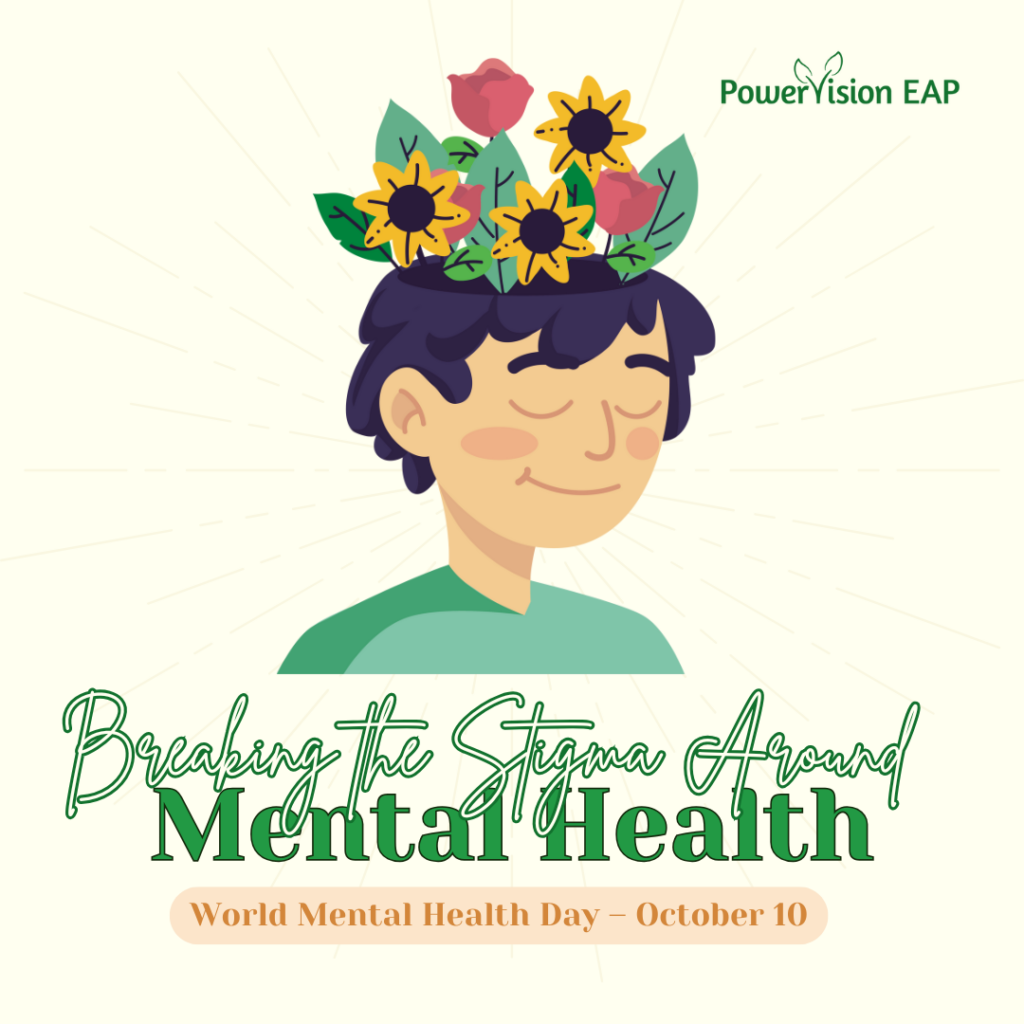
Every October 10, World Mental Health Day reminds us that mental health is as important as physical health. Yet, stigma still prevents many people from seeking help. More than half of those with mental health conditions never receive the support they need (American Psychiatric Association, n.d.). Myths and misconceptions keep the silence alive, but together, we can change this.
Common Misconceptions
Some of the most harmful myths include:
- “Mental illness means weakness.”
In truth, mental health conditions are not a sign of poor character but medical issues that anyone can face (UNICEF, n.d.).
- “People with mental illness are dangerous.”
Research shows only a small percentage of violent acts are linked to serious mental illness (Substance Abuse and Mental Health Services Administration [SAMHSA], n.d.).
- “You should just get over it.”
Mental health challenges require care and treatment, just like physical illnesses (SAMHSA, n.d.).
How Stigma Affects People
Stigma doesn’t just hurt feelings; it creates real barriers. Fear of being judged or discriminated against often stops people from reaching out for support, which can worsen their condition (Mayo Clinic, 2025). In the workplace, stigma can prevent employees from being open with their managers, limit career growth, and even affect job security (World Health Organization [WHO], 2024).
Breaking the Stigma Together
The good news is that everyone can help:
- Talk openly about mental health to normalize it.
- Use respectful language and avoid labels like “crazy.”
- Educate yourself and challenge myths when you hear them.
- Support colleagues who may be struggling by listening and pointing them to resources.
Organizations can also make a difference by training managers, offering Employee Assistance Programs, and creating policies that treat mental health the same as physical health (McKinsey & Company, 2021).
References
American Psychiatric Association. (n.d.). Stigma, prejudice and discrimination against people with mental illness. https://www.psychiatry.org
McKinsey & Company. (2021). The battle against mental-health stigma. https://www.mckinsey.com
Mayo Clinic. (2025). Mental health: Overcoming the stigma of mental illness. https://www.mayoclinic.org
SAMHSA. (n.d.). Mental health: Get the facts. https://www.samhsa.gov
UNICEF. (n.d.). Busted: 7 myths about mental health. https://www.unicef.org
World Health Organization. (2024). Mental health at work (World Mental Health Day 2024). https://www.who.int