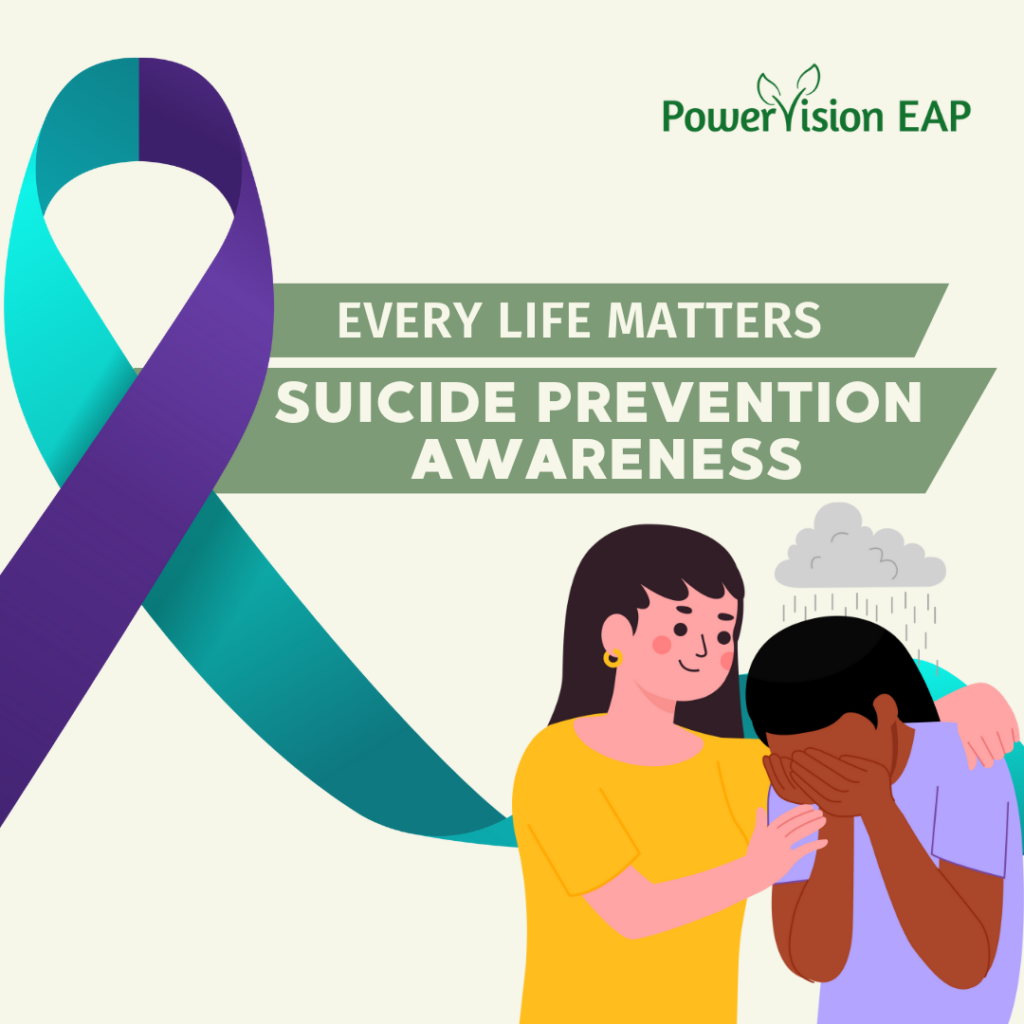
September is Suicide Prevention Awareness Month and this serves as a reminder to all of us that suicide is real, but also preventable. By learning the signs, taking action, and connecting to support, each of us can play a role in saving lives.
Warning Signs to Watch Out For
Some people show clear signs when they are struggling. These may include:
- Talking about wanting to give up or feeling hopeless
- Withdrawing from friends and family
- Big changes in mood—very sad, angry, or suddenly calm after being upset
- Giving away important belongings
- Taking risks or using alcohol or drugs more than usual
If you notice these signs in yourself or someone else, don’t ignore them.
How You Can Help
- Reach out: Ask how they’re really doing. Sometimes just listening makes a huge difference.
- Encourage support: Suggest speaking with a counselor, doctor, or trusted person.
- Stay connected: Regular check-ins show that someone cares.
- Promote safe spaces: Workplaces can help by creating open conversations and offering support programs.
Where to Get Help
You are not alone, and help is available. You may reach out to the following:
- National Center for Mental Health Crisis Hotline – 0919 057 1553
- Visit findahelpline.com for free, 24/7 hotlines.
- Mental health professionals – Counselors, psychologists, or psychiatrists can provide ongoing support.
- Community and workplace programs – Many groups and organizations offer safe, confidential help.
Every life matters. Suicide prevention is a shared responsibility. By noticing the signs, reaching out, and guiding others to help, we can make a real difference. One small act of care could save a life.
References
National Institute of Mental Health (NIMH). Warning Signs of Suicide. https://www.nimh.nih.gov/health/publications/warning-signs-of-suicide
Suicide Prevention Resource Center (SPRC). Warning Signs of Suicide. https://sprc.org/warning-signs-of-suicide
American Foundation for Suicide Prevention (AFSP). Managing Suicidal Crises. https://afsp.org
Centers for Disease Control and Prevention (CDC). Suicide Prevention. https://www.cdc.gov/suicide/prevention
World Health Organization (WHO). Suicide. https://www.who.int/health-topics/suicide
Substance Abuse and Mental Health Services Administration (SAMHSA). Suicide Prevention. https://www.samhsa.gov/mental-health/suicidal-behavior/prevention