Chapter 1: Barely Keeping It Together
Savannah had always been the strong one – the dependable colleague, the devoted mother, the one who somehow made things work. As a solo parent raising her son with special needs, every day was a delicate balancing act. She’d wake before sunrise to prepare breakfast, drop her son off at therapy, and rush to her full-time job, where a pile of emails and deadlines awaited.
When her mother, her only help, moved to another city, Savannah’s days stretched longer and her nights shorter. But still, she smiled when coworkers praised her for “managing it all.” On paper, she was. Behind closed doors, however, the exhaustion was relentless.
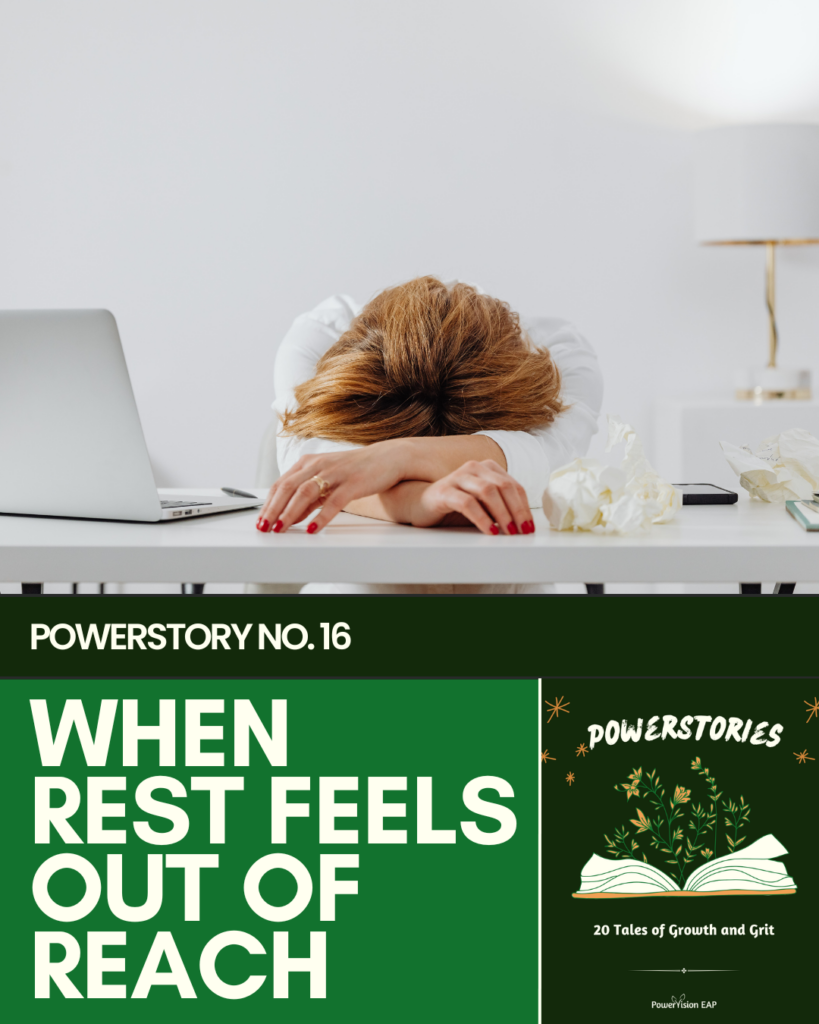
Even when she took time off, rest never truly came. Guilt filled the silence. “There’s always more to do,” she told herself. But beneath the surface, fatigue was hollowing her out.
One evening, after putting her son to bed, she stared blankly at the dishes in the sink. Her chest felt heavy. “I don’t even remember what happiness feels like anymore,” she whispered to herself, and for the first time, she couldn’t hold back the tears.
Her performance at work began to slip. Meetings blurred together. Deadlines she once handled easily now felt like mountains. Her manager noticed the change but assumed she was just “tired.” Savannah, meanwhile, wondered how much longer she could pretend she was fine.
Question:
What lessons would Savannah realize to help her manage her situation?
Chapter 2: A Safe Space to Breathe
It took days before Savannah gathered the courage to dial the EAP hotline. She had stared at the number for weeks, telling herself she wasn’t the kind of person who needed help. But that night, when even the thought of tomorrow felt unbearable, she finally called.
Her voice trembled as she spoke. What she felt wasn’t just physical tiredness, it was the weight of years spent being everything for everyone. “I just don’t know how to stop,” she admitted.
The EAP Hotline Specialist didn’t rush her or offer clichés. She listened – fully, patiently. She helped her pause long enough to notice something she’d forgotten: her own needs. For the first time in a long time, Savannah didn’t have to “keep it together.” She could just breathe.
Through succeeding sessions with an EAP counselor, she began seeing her life differently. The counselor asked simple but powerful questions.
“When was the last time you did something just for you?”
Savannah couldn’t answer at first. But that silence became her wake-up call.
She began journaling again, taking mindful breaks during work, and learning to rest without guilt. She talked with her manager, who helped her adjust her schedule and encouraged her to use her EAP sessions more regularly. Slowly, she began to find a rhythm that made space for both her responsibilities and her well-being.
Now, Savannah logs off on time. Some evenings, she and her son sit by the porch watching sunsets; moments of stillness she once thought she couldn’t afford. Her challenges remain, but she faces them with renewed strength and a heart that finally remembers what peace feels like.
Epilogue: Workplace Well-being Lessons
The Invisible Load of Working Caregivers
“As a solo parent raising her son with special needs, every day was a delicate balancing act… She smiled when coworkers praised her for ‘managing it all.’ On paper, she was.”
Many employees appear “fine” while quietly carrying immense personal responsibilities. HR and leaders should recognize that productivity doesn’t always mean well-being. By creating a culture where employees can safely share their challenges without fear of judgment, organizations help prevent silent burnout before it escalates.
EAP as a Bridge to Renewal
“Through their sessions, she began seeing her life differently… The counselor asked, ‘When was the last time you did something just for you?’”
Employee Assistance Programs aren’t just for crisis situations; they are proactive tools for personal growth and resilience. HR can help demystify EAP by promoting it as a confidential, accessible support system for everyday struggles, not just emergencies.
Supporting Work-Life Integration, Not Just Balance
“She talked with her manager, who helped her adjust her schedule and encouraged her to use her EAP sessions more regularly.”
True support happens when leaders enable flexibility and empathy in daily work arrangements. Encouraging open dialogue about workloads and personal limits fosters an environment where employees can integrate their personal and professional roles more sustainably.